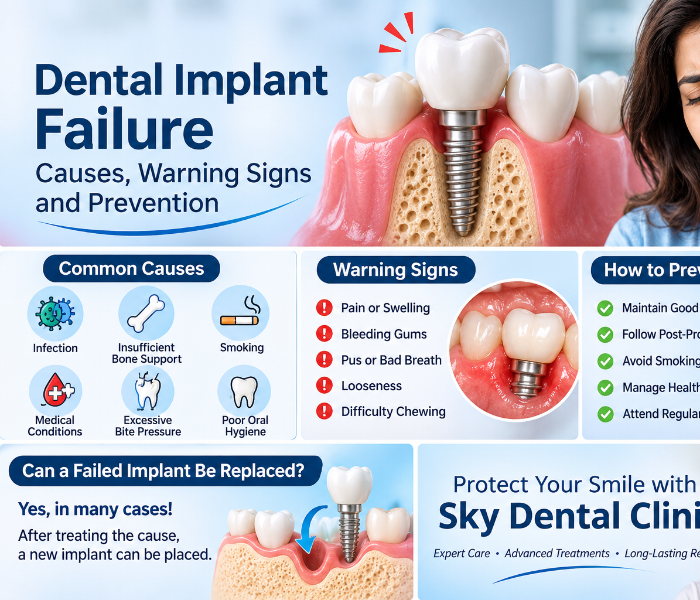
Dental implants are a popular solution for replacing missing teeth because they look natural, feel comfortable, and help restore everyday functions such as chewing and speaking. With proper care, dental implants can last for many years. However, like any dental procedure, implant treatment is not completely risk-free. In some cases, an implant may fail to heal properly, become loose, or develop complications months or even years after placement.
Understanding dental implant failure, its causes, warning signs, and prevention methods can help patients make informed decisions and protect their oral health. Whether you are considering implants or already have them, knowing what to watch for is essential.
At Sky Dental Clinic, patients can learn about dental implant treatments, proper maintenance, and the importance of regular dental evaluations to support long-term implant health.
What Does Dental Implant Failure Mean?
A dental implant is a small titanium post placed into the jawbone to act as an artificial tooth root. For an implant to function successfully, it must undergo a process called osseointegration, in which the surrounding bone gradually bonds with the implant surface.
Implant failure occurs when this bonding process does not happen properly or when the implant loses its stability over time. Failure can be classified into two types:
-
Early implant failure: Occurs during the healing phase when the implant does not integrate properly with the jawbone.
-
Late implant failure: Happens after the implant has successfully healed and functioned for a period of time, often due to infection, bone loss, or excessive biting forces.
Not every implant complication means the implant must be removed. Early diagnosis can sometimes help manage the problem before it becomes more serious.
Common Causes of Dental Implant Failure
Several factors can affect the success and longevity of dental implants.
1. Infection Around the Implant
Bacterial buildup around an implant can cause gum inflammation and damage the surrounding bone. This condition, known as peri-implantitis, may gradually weaken the implant's support if left untreated. Poor oral hygiene and untreated gum disease can increase the risk.
2. Insufficient Bone Support
Patients with inadequate jawbone density or volume may not have enough support to hold an implant securely. In some cases, bone grafting may be recommended before implant placement to create a stronger foundation.
3. Smoking and Tobacco Use
Smoking can interfere with blood circulation, slow down healing, and affect the body's ability to integrate the implant with the bone. It may also increase the risk of gum infection and long-term complications.
4. Uncontrolled Medical Conditions
Certain health conditions, particularly poorly controlled diabetes, can affect healing and increase the risk of infection. A patient's medical history, medications, and overall health should be carefully considered before implant treatment.
5. Excessive Bite Pressure
Teeth grinding, clenching, or uneven biting forces can place excessive pressure on an implant. Over time, this may affect the implant, its crown, or surrounding bone. Patients with grinding habits may benefit from a customised night guard.
6. Poor Oral Hygiene and Irregular Dental Visits
Dental implants need daily cleaning just like natural teeth. Plaque accumulation around the implant can irritate the gums and lead to inflammation and bone loss. Skipping regular dental check-ups can allow small problems to develop unnoticed.
Warning Signs of Dental Implant Failure
Recognising symptoms early can help prevent further complications. Watch for the following warning signs:
-
Persistent or increasing pain around the implant.
-
Swollen, red, or tender gums.
-
Bleeding while brushing or flossing near the implant.
-
Pus, unpleasant taste, or bad breath.
-
Looseness of the implant or the attached crown.
-
Difficulty chewing or discomfort while biting.
-
Gum recession or visible exposure of the implant surface.
Mild discomfort during the initial healing period may be normal. However, symptoms that worsen, return after healing, or continue for an extended period should not be ignored. If the implant itself feels mobile, seek dental attention promptly.
How Can Dental Implant Failure Be Prevented?
Prevention begins even before the implant is placed. Careful planning, suitable treatment, and consistent maintenance all contribute to better outcomes.
-
Choose proper treatment planning: A detailed examination of the gums, jawbone, bite, and medical history helps determine whether implant treatment is suitable.
-
Maintain excellent oral hygiene: Brush twice daily, clean between teeth, and use implant-specific cleaning aids if recommended by your dentist.
-
Follow post-operative instructions: Avoid disturbing the implant site and follow your dentist's advice regarding diet, cleaning, and healing.
-
Avoid smoking: Reducing or quitting tobacco use can support healthier healing and gum tissues.
-
Manage existing health conditions: Keep conditions such as diabetes under control and discuss medications with your dentist before treatment.
-
Attend regular implant maintenance visits: Professional cleaning and examination help detect inflammation, bone changes, or mechanical problems early.
Can a Failed Dental Implant Be Replaced?
In many cases, a failed implant can be treated, but the approach depends on the reason for failure and the amount of bone remaining. The dentist may first remove the implant if necessary, treat the infection, and allow the tissues to heal. Bone grafting may be required before another implant can be placed.
Some complications, such as inflammation or problems with the implant crown, may be manageable without removing the implant. A clinical examination and dental imaging help determine the most appropriate treatment.
Protect Your Smile with the Right Dental Care
Dental implants can be an effective, long-lasting way to replace missing teeth, but their success depends on more than the procedure alone. Healthy gums, adequate bone support, good oral hygiene, proper bite alignment, and regular dental monitoring all play an important role.
If you are considering implants or experiencing discomfort around an existing implant, consulting a dental professional can help you understand your options.
At Sky Dental Clinic, patients can seek guidance on dental implant treatment, implant maintenance, and personalised care for long-term oral health.
If you are looking for a Dental clinic in Bangalore or a Top Dentist in Bangalore, learning about your treatment options and getting the right evaluation is an important first step. You can also explore Best Dental clinic in Koramangala, Dental clinic in RR Nagar, or Dental clinic in Yelahanka for location-specific dental care.
A healthy implant is not just about replacing a missing tooth—it is about protecting your comfort, confidence, and smile for years to come.


 ManyaSoft