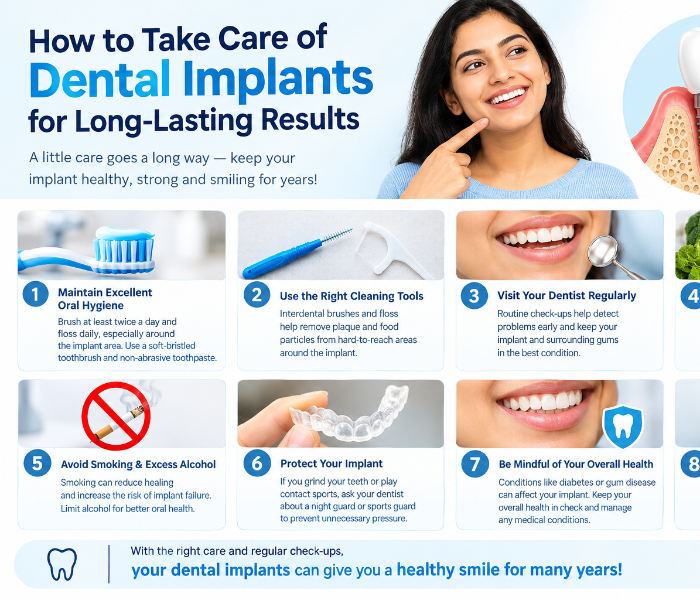
A dental implant can do more than replace a missing tooth. It can help restore your smile, improve chewing comfort, and support confidence in everyday life. However, getting a dental implant is only the beginning. The way you care for it afterward plays an important role in maintaining its health and longevity.
Although dental implants are designed to be durable, they are not completely maintenance-free. Plaque can accumulate around the implant, the surrounding gums can become inflamed, and excessive biting pressure may cause complications. The good news is that a consistent oral hygiene routine and regular dental visits can help protect your investment.
If you have recently received an implant or are planning to get one, here is how to take care of your dental implants for long-lasting results.
1. Brush Twice a Day Without Fail
Brushing your teeth twice daily is one of the simplest ways to maintain a healthy dental implant. Even though the implant itself cannot develop tooth decay, the gums and bone supporting it can still be affected by bacterial plaque.
Use a soft-bristled toothbrush and fluoride toothpaste to clean your natural teeth, implant-supported crown, and gumline gently. Pay particular attention to the area where the crown meets the gums, as plaque can collect around this junction.
Avoid brushing too aggressively. Excessive pressure can irritate your gums and contribute to discomfort. If you find it difficult to clean around the implant, ask your dentist to demonstrate the correct brushing technique.
2. Clean Between Your Teeth Every Day
Brushing alone cannot remove all the food particles and plaque trapped between your teeth. This is why interdental cleaning is essential for people with dental implants.
Depending on your implant's position and design, your dentist may recommend dental floss, interdental brushes, or a water flosser. Special implant-friendly cleaning aids can help reach areas that a regular toothbrush may miss.
Healthy gums are crucial for supporting an implant. Without proper cleaning, bacteria can cause inflammation around the implant, potentially leading to a condition called peri-implantitis. This condition can damage the surrounding bone if left untreated.
Make interdental cleaning part of your daily routine rather than waiting until food gets stuck.
3. Follow Your Dentist's Instructions After Surgery
The first few days and weeks after implant placement require special attention. Your dentist will provide instructions based on your procedure, healing progress, and whether additional treatments were performed.
During the initial healing period:
- Eat soft foods as recommended by your dentist.
- Avoid chewing directly on the surgical area until you are advised it is safe.
- Take prescribed medications exactly as directed.
- Avoid smoking, as it can interfere with healing.
- Keep the surgical area clean according to your dentist's instructions.
- Attend all scheduled follow-up appointments.
Do not rush back to your usual eating habits simply because the discomfort has reduced. The implant needs time to integrate with the surrounding bone, a process known as osseointegration.
4. Be Careful With Hard and Sticky Foods
Once your implant has healed, you can generally enjoy a wide variety of foods, depending on your dentist's assessment. However, it is sensible to avoid habits that place excessive force on your implant crown.
Chewing ice, biting hard candies, cracking nuts with your teeth, or opening packaging with your teeth can damage dental restorations. Sticky foods may also be difficult to clean from certain implant-supported restorations.
If you enjoy crunchy foods, cut them into manageable pieces and chew comfortably rather than applying unnecessary pressure to one area.
Remember that dental implants are strong, but the crown attached to the implant can still chip, loosen, or wear down.
5. Never Ignore Gum Health
One common misconception is that dental implants cannot develop gum problems because they are artificial. In reality, the tissues surrounding an implant need just as much attention as the gums around natural teeth.
Watch for symptoms such as persistent redness, swelling, bleeding, tenderness, or discharge around the implant. These signs should not be dismissed as normal, especially if they continue or appear after the initial healing period.
Peri-implant diseases can progress without obvious pain in their early stages. Early professional assessment can help identify problems before significant damage occurs.
If your implant feels loose or you experience increasing pain or swelling, contact your dentist promptly.
6. Attend Regular Dental Check-Ups
Even if your implant feels completely comfortable, regular dental examinations remain essential. Your dentist can check the condition of the implant crown, surrounding gums, bite alignment, and supporting bone when clinically indicated.
Professional cleaning also helps remove deposits that may be difficult to eliminate at home. Your dentist or hygienist can select appropriate instruments and cleaning methods designed for implant-supported restorations.
The recommended appointment schedule depends on your oral health, history of gum disease, smoking habits, implant design, and individual risk factors. Some people may need more frequent monitoring than others.
Do not wait for pain before scheduling your next visit.
7. Quit Smoking and Protect Your Oral Health
Smoking can impair healing and increase the risk of implant-related complications. If you smoke, consider seeking professional support to help you quit, particularly before implant surgery and throughout the healing period.
Other health factors, including poorly controlled diabetes and a history of periodontal disease, may also affect implant outcomes. Inform your dentist about your medical conditions, medications, and changes in your general health.
A balanced diet, adequate hydration, and consistent oral hygiene support overall oral health. These habits cannot guarantee that an implant will last forever, but they can contribute to a healthier environment around it.
8. Address Teeth Grinding and Bite Problems
Do you grind your teeth while sleeping or clench your jaw when stressed? These habits, known as bruxism, can place substantial pressure on dental implants and their restorations.
Over time, excessive forces may contribute to crown damage, screw loosening, or other mechanical complications. If you notice jaw discomfort, morning headaches, or unusual tooth wear, discuss these symptoms with your dentist.
Depending on your needs, a professionally fitted night guard or adjustments to your bite may be recommended. Never attempt to modify an implant crown yourself if it feels uncomfortable or uneven.
How Long Can Dental Implants Last?
With appropriate placement, good oral hygiene, and regular professional maintenance, dental implants can last for many years and sometimes decades. However, longevity varies according to individual health, bone support, gum condition, lifestyle, and maintenance habits.
It is also important to understand that the implant fixture and the visible crown are different components. While the implant fixture may remain functional for many years, the crown may eventually require repair or replacement because of normal wear and tear.
The best approach is to treat implant care as a lifelong commitment rather than a temporary routine.
Protect Your Smile With the Right Dental Care
Dental implants can provide a reliable solution for replacing missing teeth, but their long-term success depends on more than the procedure itself. Daily brushing, cleaning between teeth, healthy lifestyle choices, and regular dental check-ups all contribute to protecting the implant and the surrounding tissues.
If you need guidance on maintaining an existing implant or are considering replacing a missing tooth, consult a qualified dental professional for advice tailored to your needs.
At Sky Dental Clinic, patients can seek guidance on implant care, oral hygiene, and suitable dental treatment options. Whether you are looking for a Dental clinic in Bangalore, a Top Dentist in Bangalore, the Best Dental clinic in Koramangala, a Dental clinic in RR Nagar, or a Dental clinic in Yelahanka, professional advice can help you make informed decisions about your oral health.
Your dental implant is an investment in your smile. Give it the care it deserves, every single day.


 ManyaSoft